Discovery Reveals 10,000 Years of Rock Art in Sinai


The Egyptian archaeological mission of the Supreme Council of Antiquities, working in southern Sinai, has announced the discovery of one of the most important newly identified archaeological sites of exceptional historical and artistic value, previously unknown, known as the Umm ‘Iraq Plateau.
Mr. Sherif Fathy, Minister of Tourism and Antiquities, described the discovery as a significant qualitative addition to Egypt’s archaeological map, as it reflects the unique civilizational and human richness of the land of Sinai. It also represents new evidence of the succession of civilizations in this important region of Egypt over thousands of years and confirms the Ministry’s continued efforts in research, excavation, and scientific documentation in accordance with the latest international standards.
The Minister added that this type of discovery contributes to strengthening Egypt’s position on the cultural tourism map and opens new prospects for this important tourism sector.
For his part, Dr. Hisham El-Leithy, Secretary-General of the Supreme Council of Antiquities, explained that the site is among the most important recently discovered rock art locations. He emphasized that the chronological and technical diversity of the inscriptions at the Umm ‘Iraq Plateau transforms it into an open-air natural museum, documenting the evolution of human artistic and symbolic expression from prehistoric periods through Islamic phases and granting the site exceptional scientific importance.
He added that scientific studies and analyses of the inscriptions and drawings will continue in the coming period, with the aim of developing an integrated plan for the protection and sustainable documentation of the site.
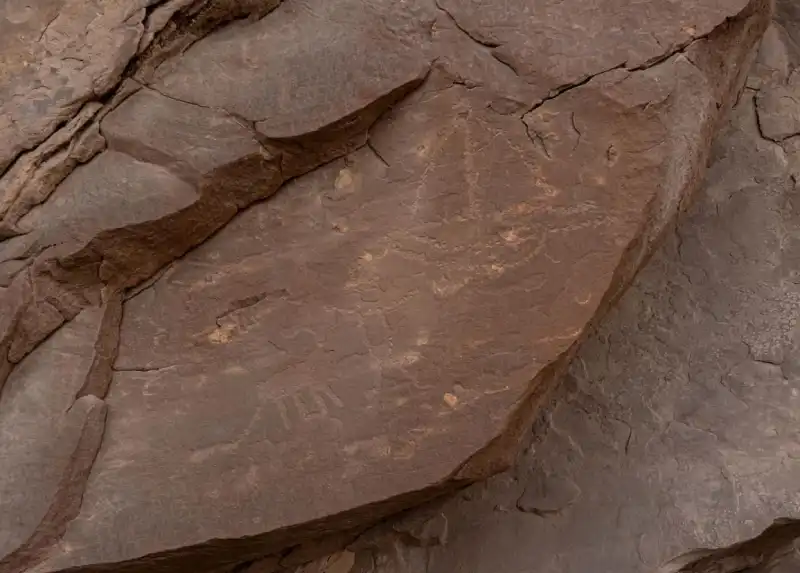
Mr. Mohamed Abdel Badi, Head of the Egyptian Antiquities Sector, stated that this discovery comes within the framework of survey and scientific documentation activities of rock inscriptions in southern Sinai, guided by Sheikh Rabee Barakat, a resident of the Serabit El-Khadim area. This reflects the important role of Sinai’s inhabitants in supporting the state’s efforts to preserve cultural heritage.
The Umm ‘Iraq Plateau site is located in a sandy area about 5 kilometers northeast of the Temple of Serabit El-Khadim and the copper and turquoise mining areas, in a strategically elevated position overlooking a vast open area extending northward to the El-Tih Plateau, suggesting its use over time as a lookout point, gathering place, and resting site.
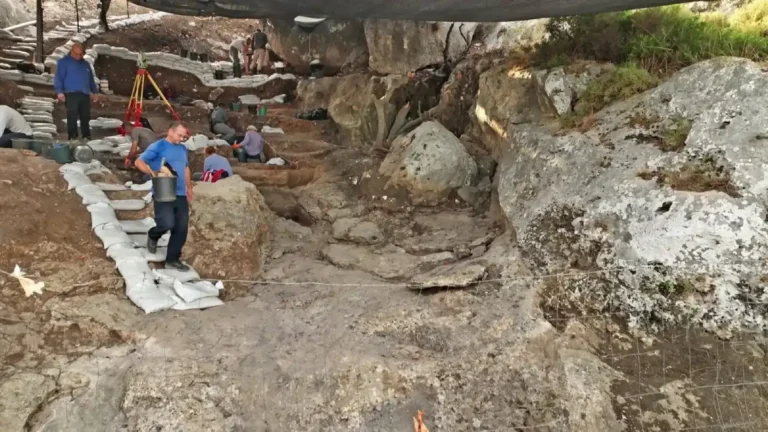
He explained that the Egyptian mission succeeded in fully documenting the site, which includes a natural sandstone rock shelter extending along the eastern side of the plateau for more than 100 meters, with a depth ranging between two and three meters, while the ceiling height varies from about five feet to approximately one and a half feet.
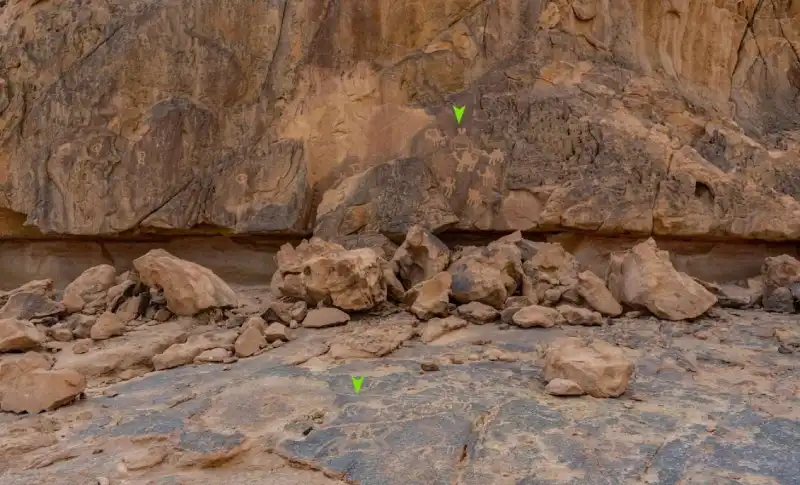
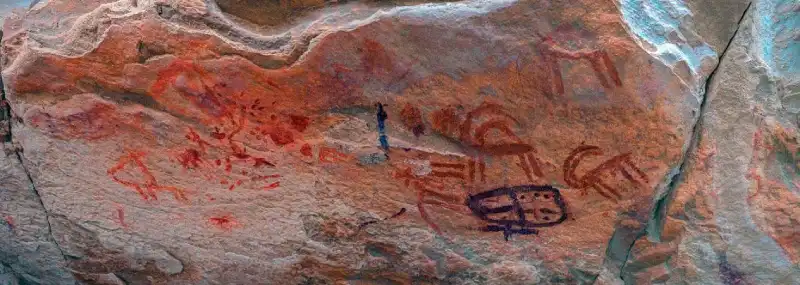
The ceiling of the rock shelter contains a large number of rock paintings executed in red pigment, including animal scenes and various symbols still under study. Another group of drawings executed in gray pigment was documented for the first time, along with numerous inscriptions and scenes produced in multiple styles and techniques, reflecting unique artistic richness and cultural diversity.
Dr. Hisham Hussein, Head of the Central Administration of Lower Egypt Antiquities and leader of the mission, stated that documentation work inside the shelter resulted in the discovery of large quantities of animal droppings, indicating its use in later periods as a refuge for people and livestock against rain, storms, and cold. Stone divisions forming independent dwelling units were also identified, along with traces of burn layers at the center, confirming repeated human activity at the site over successive periods.
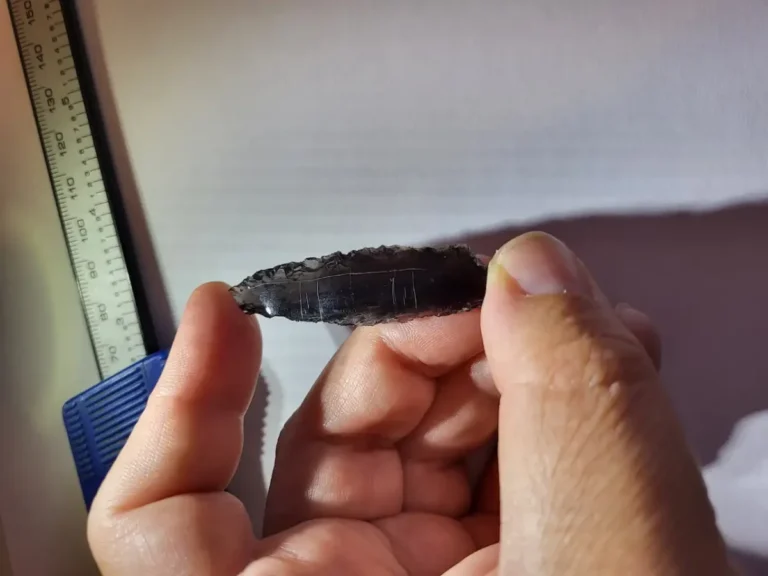
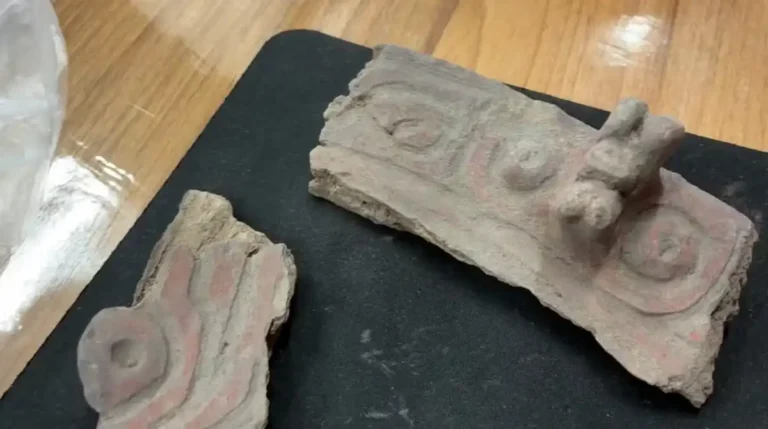
Archaeological survey activities also led to the discovery of various flint tools, in addition to numerous pottery fragments—some likely dating to the Middle Kingdom period, while others date back to the Roman era, specifically the third century A.D.—confirming the continued use of the site for thousands of years.
According to the preliminary study, the rock inscriptions and paintings were divided into several chronological groups. The oldest group was executed on the ceiling of the shelter in red pigment and is preliminarily dated between 10,000 and 5,500 B.C., depicting scenes of various animals that reflect the nature of life during those early periods.
There are also deeply carved relief inscriptions showing a hunter using a bow to hunt ibex, accompanied by several hunting dogs, in a scene reflecting the lifestyles and economic activities of early human communities.
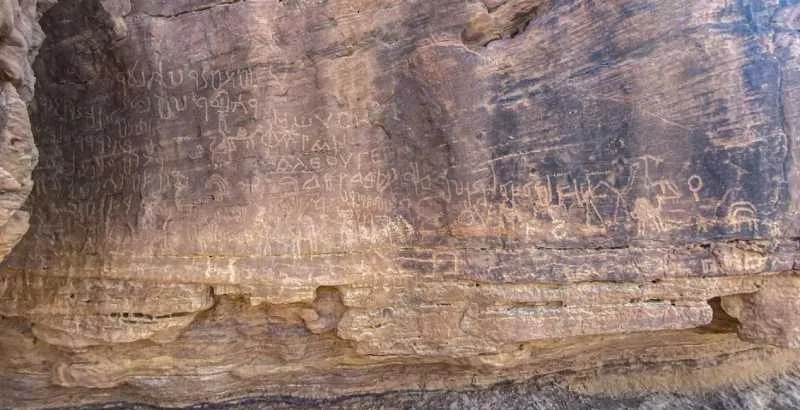
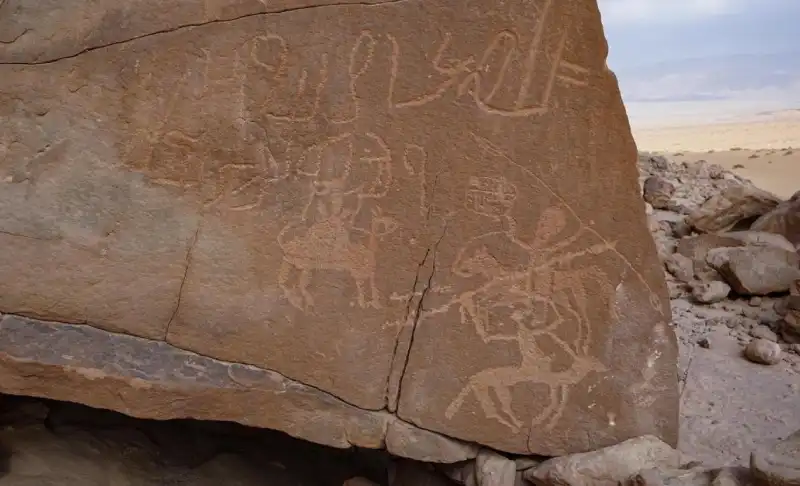
Other groups include scenes of camels and horses in different forms, ridden by individuals carrying war weapons, some accompanied by Nabataean inscriptions, indicating later historical periods marked by diverse cultural and civilizational interactions in the region.
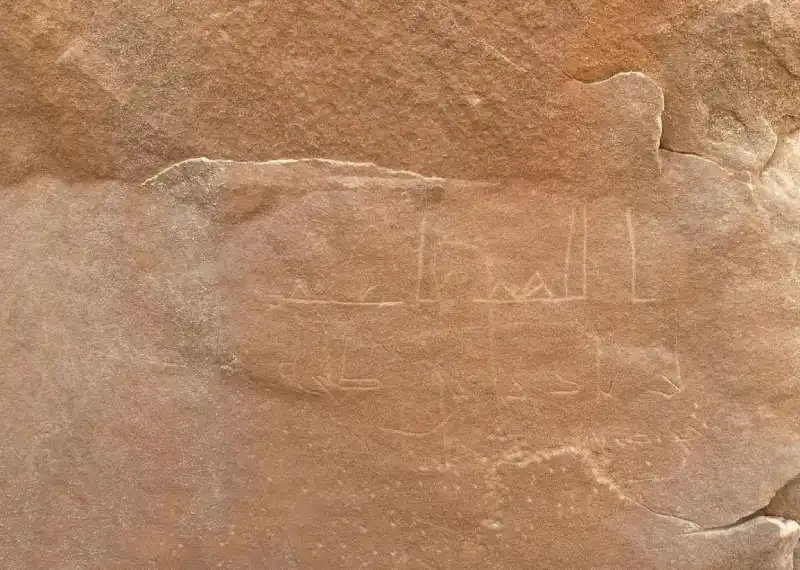
A collection of Arabic inscriptions was also documented, representing important testimony to the continued use of the site during the early Islamic periods and beyond.