Archaeological Discovery Reveals 7,500-Year-Old Female Figurine in Romania



In a discovery offering a rare glimpse into the beliefs and daily life of Neolithic communities, archaeologists from the National Museum of Eastern Carpathians (MNCR) have unearthed a small, expressive female clay figurine, approximately 7,500 years old. The artifact was found during preventive excavations in the Arcuș – Platoul Târgului (Vásártető) area, on the outskirts of Sfântu Gheorghe.
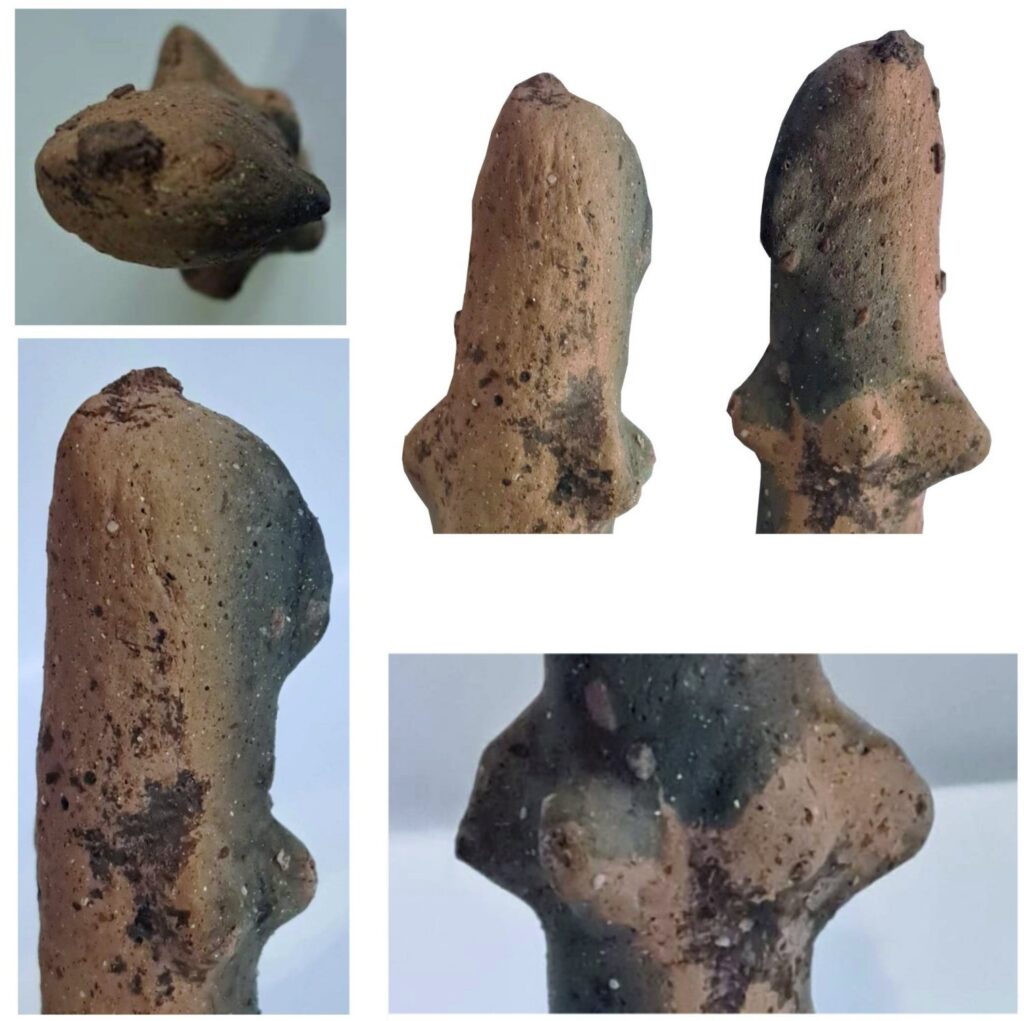
The figurine, standing merely 6 centimeters tall, depicts a female figure with open arms, in a pose suggesting prayer or invocation. This discovery is particularly significant due to its rarity within the Starčevo-Criș culture, one of the oldest agricultural cultures in Southeast Europe, which flourished between 5800 and 5500 BC.
Details of the Discovery and Archaeological Context
The MNCR team was conducting research in an area designated for the expansion of an electrical grid for the Sepsi Arena when they encountered the remains of a Neolithic settlement. Amidst fragments of pottery, burnt clay, and charcoal, within a dwelling dating back over seven millennia, the small figurine came to light.
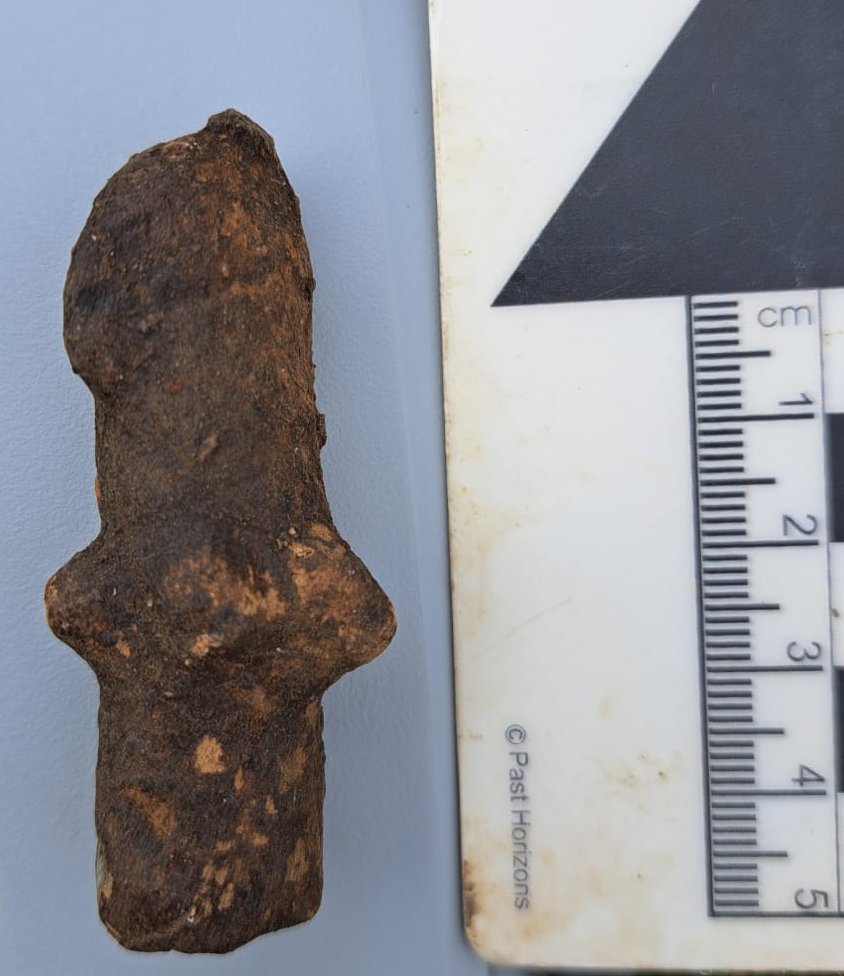
Modeled from a mixture of clay, straw, and sand, and subsequently fired at high temperatures, the figure displays a light brick coloration, with darker nuances on the front, indicating greater exposure to fire. Although the face is not richly detailed, features such as incised V-shaped eyes, a small oval nose, and fine lines suggesting long hair, possibly tied in a bun, are visible. This hair representation is notable, being one of the oldest pieces of evidence for female hairstyles in the northern Danube region.
The arms, modeled laterally and raised, and two small protuberances indicating breasts, confirm the figure’s female identity. The open-arm posture was common in Neolithic representations, symbolizing connection with the divine, prayer, or invocation rituals.
Uniqueness of the Arcuș Figurine
Figurines like this are uncommon in the Starčevo-Criș culture. Most known “idols” from this period, originating from regions such as Banat or Criș, often feature exaggerated forms, known as “Venuses,” with prominent hips, symbolizing fertility. The Arcuș piece, however, stands out due to the absence of exaggerated features, presenting a more slender and simple, yet highly expressive, silhouette.
This small clay figure is not merely an artifact; it is a link to the past, offering a deeper understanding of an era when human communities began to settle, cultivate the land, and seek spiritual meanings. Whether as an offering, amulet, or ritualistic object linked to fertility or home protection, the Arcuș figurine allows us to glimpse the thoughts, beliefs, and sensibilities of people who, millennia ago, already felt the need to connect with something greater than themselves.