Discovery Reveals the World’s Oldest Sewing, Dating Back 12,000 Years


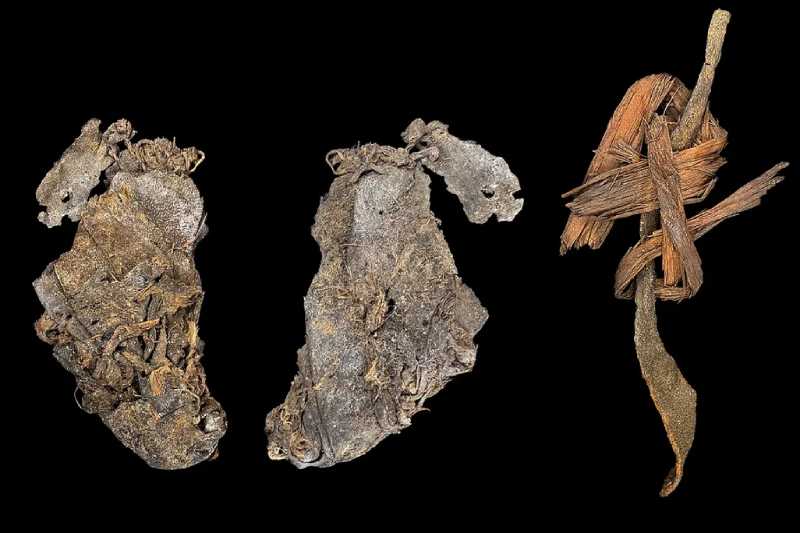
Archaeologists have announced an extraordinary discovery that could rewrite parts of the history of human clothing: approximately 12,000-year-old fragments of elk hide found in caves in Oregon (USA) are the oldest known examples of sewing in the world — and possibly the oldest physical remains of clothing ever recovered.
The small pieces of hide, stitched with cords made from plant fibers and animal hair, were originally discovered in Cougar Mountain Cave in the late 1950s, but only recently analyzed by researchers who used radiocarbon dating to determine their age.
Although scientists still cannot say with certainty whether these fragments were part of a garment, moccasin, bag, or portable shelter, the fact that they were definitively sewn — with cord passing in and out along the edge of the hide — indicates a surprisingly advanced technical skill for that time period.
/https://tf-cmsv2-smithsonianmag-media.s3.amazonaws.com/filer_public/df/a5/dfa5a0dd-3854-424b-b7fd-9fc8a443883a/overview-of-cougar-mountain-cave-looking-north-photo-courtesy-of-brent-mcgregor-and-used.jpeg)
The research, published in the scientific journal Science Advances, also examined other artifacts from the same collection of 55 items, including bone needles, braided cords, and wooden objects, which together provide a rare glimpse into the technology and cultural adaptation of Indigenous peoples at the end of the last Ice Age.
These findings show that human communities in North America developed complex sewing techniques long before the rise of historical civilizations such as ancient Egypt — whose pyramid construction began thousands of years later.
/https://tf-cmsv2-smithsonianmag-media.s3.amazonaws.com/filer_public/7f/0c/7f0c918b-5095-44be-994d-8af26fbcc4f7/sciadvaec2916-f4.jpeg)
Important context: Organic materials such as hide and fibers rarely survive this long in the archaeological record, which makes this discovery especially valuable. The dry caves of Oregon helped preserve the material, offering a unique window into clothing production in human prehistory.