Gold-Enamelled Artifacts Discovered at the Ho Dynasty Citadel


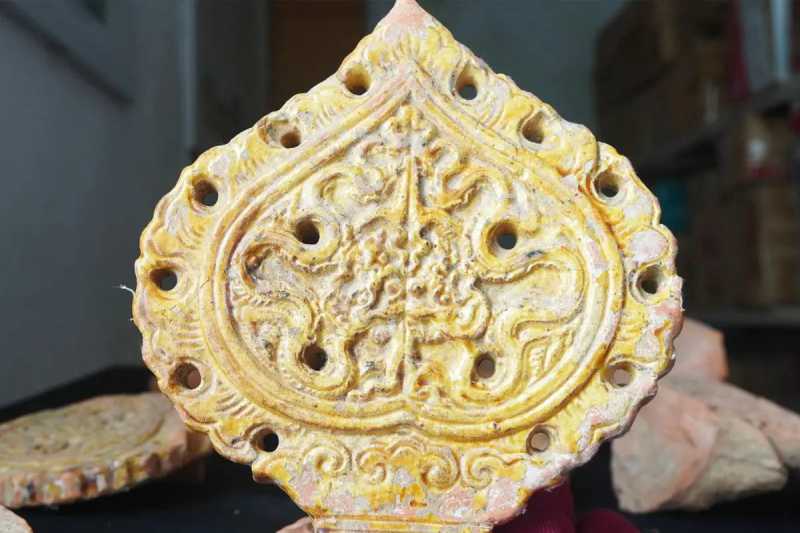
A team of archaeologists has announced the discovery of numerous rare terracotta artifacts with gold enamel during excavations at the Ho Dynasty Citadel site, a World Heritage Site located in southeastern Thanh Hóa Province, Vietnam.
Dozens of these ornamental pieces were found behind a pair of headless stone dragons in an area believed to be associated with the palace architecture of the former capital known as Tây Đô.

Among the most notable objects are terracotta Bodhi leaves coated with golden glaze, decorated with intricate dragon motifs—a symbol strongly associated with imperial power and ceremonial protection. The presence of these ornamental elements points to a sophisticated level of technological and artistic skill during the Ho Dynasty period, which ruled the region between 1398 and 1407.

The Ho Dynasty Citadel was constructed in 1397 and served as the capital for a brief yet significant period in Vietnamese history. The complex includes ceremonial and defensive areas, including the structure of the Nam Giao altar, used for rituals offering tribute to heaven and earth.
Extensive archaeological excavations are currently underway at the citadel, authorized by Vietnam’s cultural authorities, who are also seeking to explore other sections of the ancient imperial capital through broader archaeological research initiatives.

This discovery not only enriches knowledge about the art and architecture of the Ho Dynasty but may also help identify the precise locations of ceremonial and palace spaces that had previously been only theorized by researchers. The gold-glazed ceramics, in particular, reflect a level of artisanal sophistication that challenges simplistic interpretations of the technology and aesthetic practices of that historical era.