The largest Iron Age spear ever found in India has been discovered


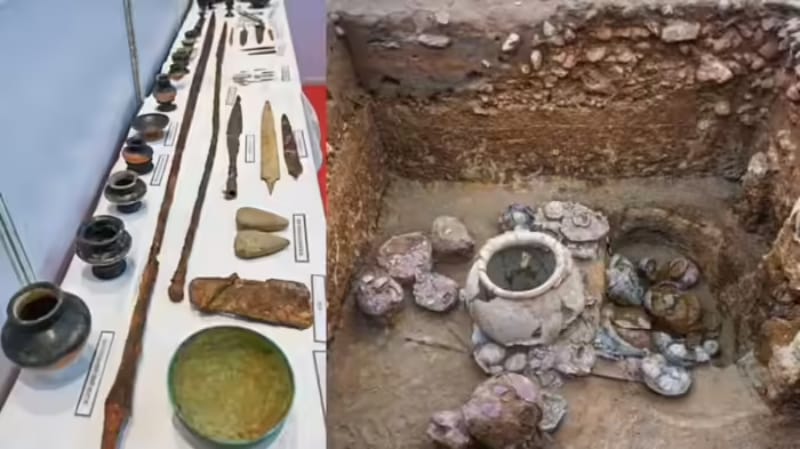
Archaeologists in the southern Indian state of Tamil Nadu have discovered an eight-foot-long iron spear (about 2.4 meters), considered the largest Iron Age weapon ever found in the country. The artifact was excavated at the archaeological site of Thirumalapuram, near the city of Tenkasi, and was dated to approximately 3345 BCE, making it also one of the oldest iron specimens ever identified in the region.
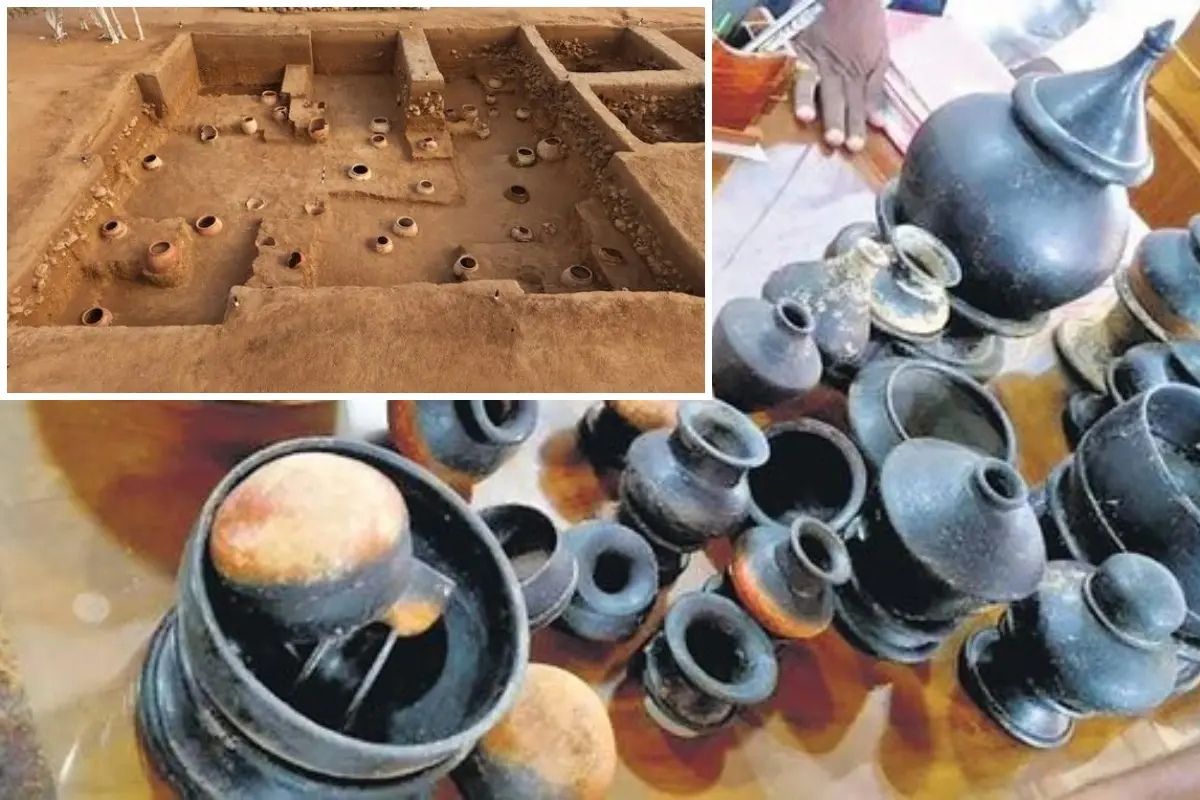
During the excavation, researchers found two iron spears, one measuring eight feet and the other about 6.5 feet, arranged in an “X” shape beside a funerary urn that contained gold objects. The arrangement of the artifacts suggests that the individual buried at the site held high social status, possibly a leader or a highly important warrior.
According to archaeologist K. Vasanthakumar, who led the excavation, the larger spear has a slightly rounded end, indicating it was designed to facilitate handling. Specialists state that the object may have been used both as a weapon to protect livestock and wealth and as a ceremonial item, custom-made to accompany a prestigious figure in burial.
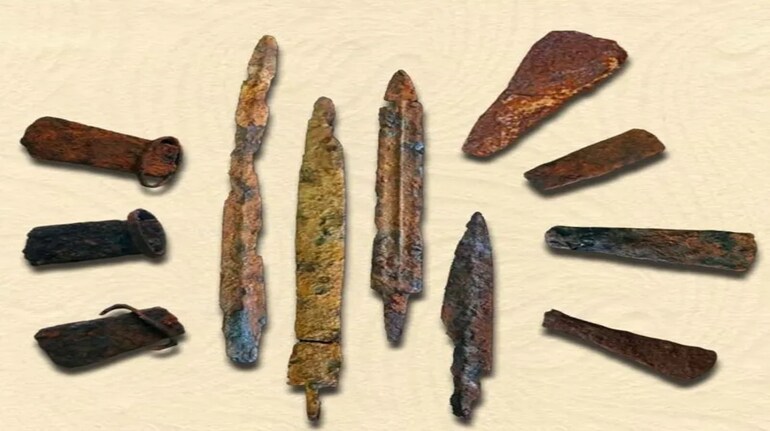
The discovery reinforces evidence that iron metallurgy in Tamil Nadu was already highly advanced between 3000 BCE and 2500 BCE. Previous studies identified iron objects at at least six archaeological sites in the state, suggesting that the development of iron extraction and smelting technology in the Indian subcontinent may have occurred independently, possibly earlier than in regions traditionally associated with the beginning of the Iron Age, such as Anatolia.
Researchers note that iron production requires temperatures between 1,200°C and 1,500°C, demonstrating a high level of technical knowledge for the period. The good preservation of the artifact is attributed to the dry soil conditions of the region, which slow metal corrosion, unlike what occurs in more humid areas of the Indian subcontinent.
The Tamil Nadu State Department of Archaeology, in partnership with the Indian Institute of Technology Gandhinagar (IIT Gandhinagar), announced that it will conduct a two-year study across several archaeological sites in the state. The goal is to map the evolution of iron technology and increase international recognition of the region’s historical importance to global archaeology.