Startup Claims It Can Turn Water Into Rocket Fuel


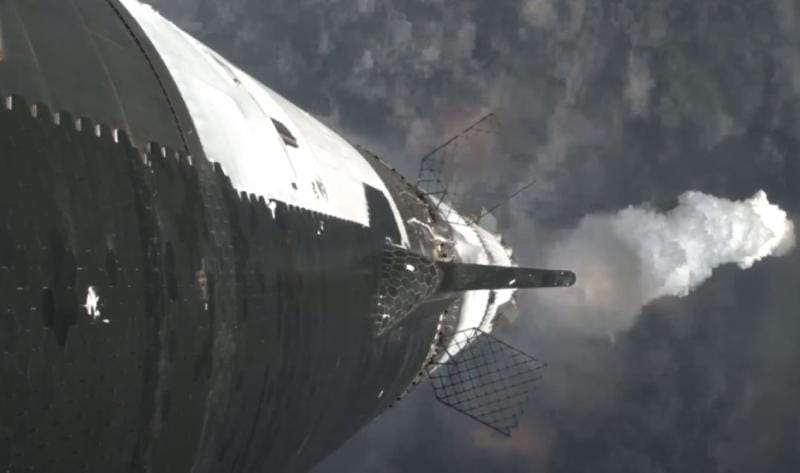
An American startup led by veteran aerospace engineers is drawing attention by claiming it can turn water into usable rocket fuel — a breakthrough that, if proven, could revolutionize space exploration and enable refueling in orbit and on other celestial bodies such as the Moon and Mars.
The company, called General Galactic and founded by former SpaceX engineers, plans to demonstrate its technology in an experiment known as Trinity. The project calls for launching a satellite weighing about 500 kg (approximately 1,100 lb) aboard a Falcon 9 rocket in October 2026.
How the Technology Would Work
According to its developers, the system uses water electrolysis — a process in which electricity splits water molecules into oxygen and hydrogen — to produce gases that can be used as propellants. The concept includes two propulsion modes:
- Chemical propulsion:
The generated hydrogen and oxygen are recombined to produce traditional thrust, similar to conventional liquid rocket fuel. - Electric propulsion:
The oxygen is converted into ionized plasma, which can be accelerated by magnetic fields to generate highly efficient thrust.
This approach has two potentially significant advantages:
- Simpler storage: Water is much easier to store than traditional cryogenic fuels.
- Use of in-space resources: If water extraction technologies — such as those currently being studied for the Moon and asteroids — prove successful, it could eventually become possible to produce fuel directly in space, reducing the need to launch it from Earth.
Propulsion experts caution that, despite its promise, no system of this kind has yet been proven at large scale. The idea of converting water directly into fuel has been discussed for decades, particularly in the context of lunar or Martian bases, but the energy required for the conversion remains high and the technical risks are considerable.
For example, heavy electrolysis equipment can reduce the system’s overall efficiency, and ionized oxygen may damage sensitive electronic components.
The pursuit of fuels produced from resources found in space — known as In-Situ Resource Utilization (ISRU) — has been gaining momentum. Scientists are investigating methods to extract water and oxygen from lunar regolith or Martian minerals in order to support future crewed missions.
In addition, research has shown that extracting water and oxygen directly from lunar dust using solar energy may be feasible, suggesting that “in situ” materials could become viable fuel sources in the future.