
Greenland ice melt has increased sixfold, worrying scientists.


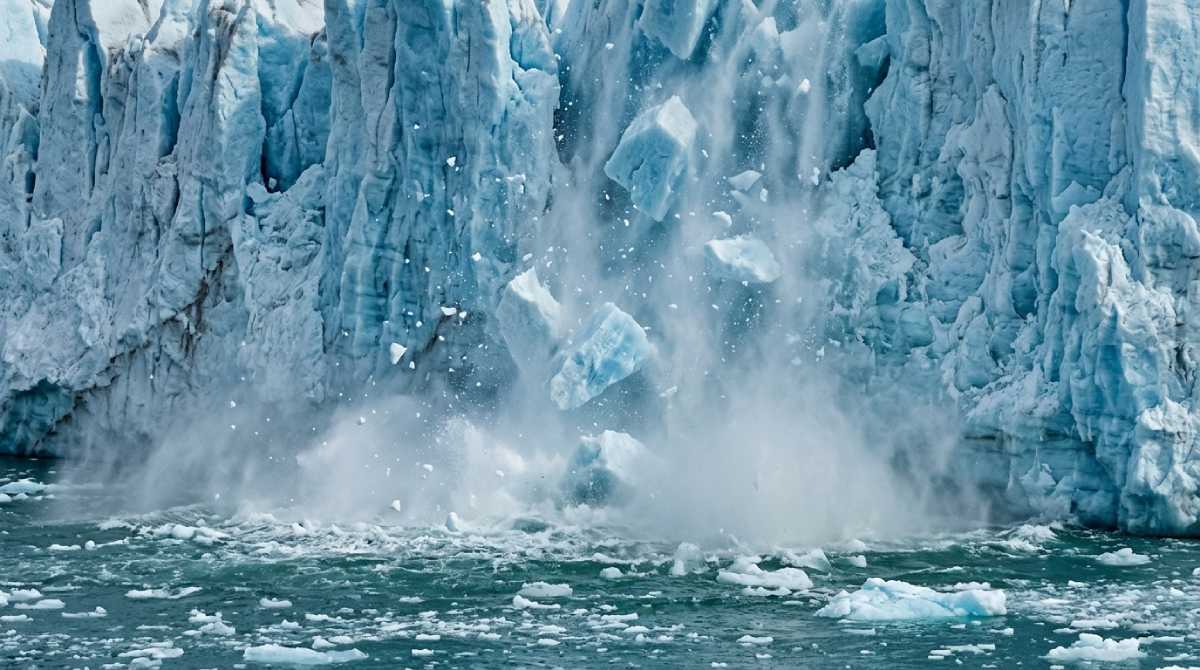
A study conducted by the University of Barcelona reveals that the melting of Greenland’s ice sheet is occurring at an unprecedented rate, with extreme events becoming more frequent and intense. Since 1990, meltwater production has increased dramatically, leading to an alarming rise in the amount of water released from the melting ice.
Drastic changes in ice melt
Since 1990, the area affected by extreme melt events in Greenland has grown by an average of 2.8 million km² per decade. The amount of meltwater produced by these events has also increased significantly, rising from an average of 12.7 gigatonnes per decade between 1950 and 2023 to 82.4 gigatonnes per decade since 1990. This represents a sixfold increase in meltwater production.
Extreme melt events are becoming more frequent
Data indicates that seven of the ten most intense melt events have occurred since 2000, with notable episodes in August 2012, July 2019, and July 2021. These events have no comparable historical precedents, highlighting the anomaly of current climate conditions. In addition, the amount of water generated by each extreme event has increased by up to 63% compared to earlier periods.
Northern Greenland as a melting hotspot
Northern Greenland stands out as one of the main hotspots for extreme melting. Projections suggest that under high greenhouse gas emission scenarios, the most intense melt anomalies could increase by up to three times by the end of the century. This trend underscores the need for continuous monitoring and mitigation strategies.
Global implications and growing strategic importance
Rapid changes in Greenland’s ice sheet have significant global environmental implications, such as rising sea levels and potential disruptions to ocean circulation. In addition, Greenland is becoming a focal point in emerging strategic, economic, and territorial dynamics in the Arctic. Understanding the processes driving intensified extreme melting is crucial for anticipating future risks and informing policy decisions.
The study’s findings, published in the journal Nature Communications, highlight the urgency of global action to address climate change and its consequences. For more information, see the full study in Nature Communications.
Source: sciencedaily.com