Marks from 40,000 years ago may be a precursor to writing.


Renowned international researchers have uncovered evidence that symbol systems used by humans around 40,000 years ago exhibited a level of structural complexity previously unseen in the archaeological record — suggesting that our ancestors were already organizing information systematically long before the earliest recognized forms of writing.
The study, led by linguist Christian Bentz of Saarland University and archaeologist Ewa Dutkiewicz of the Museum of Prehistory in Berlin, closely analyzed hundreds of artifacts from the Aurignacian period (approximately 43,000 to 34,000 years ago), discovered in caves in what is now southern Germany.
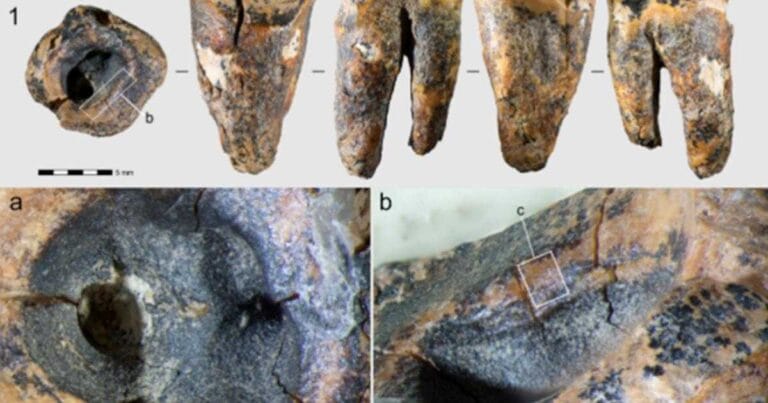
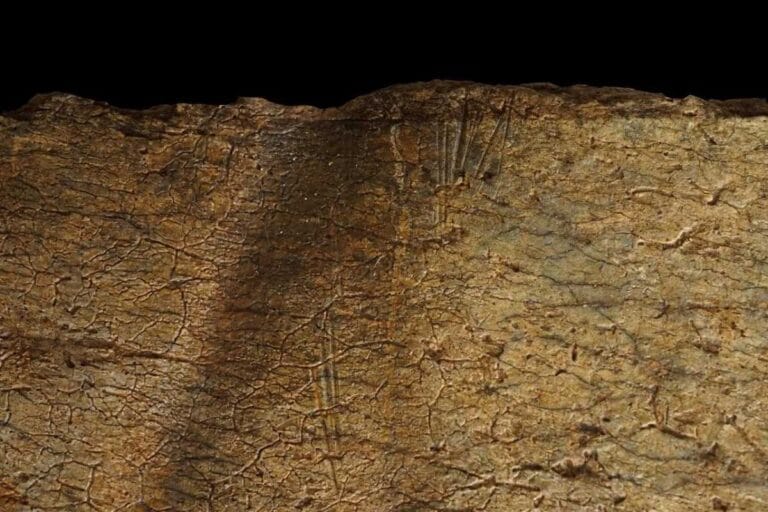
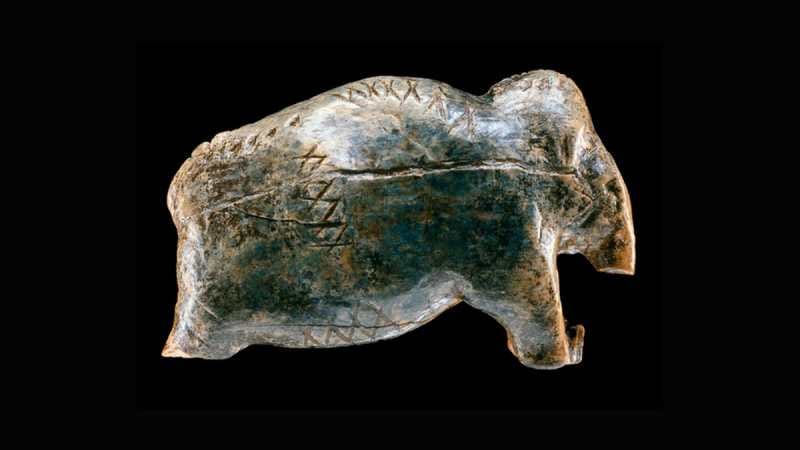
Among the objects examined were small instruments, tools, and sculptures carved from ivory, bone, and antler, many decorated with lines, dots, crosses, zigzags, and other geometric signs. In total, more than 3,000 individual marks were cataloged across 260 artifacts and subjected to statistical analysis based on information theory models and computational linguistics.
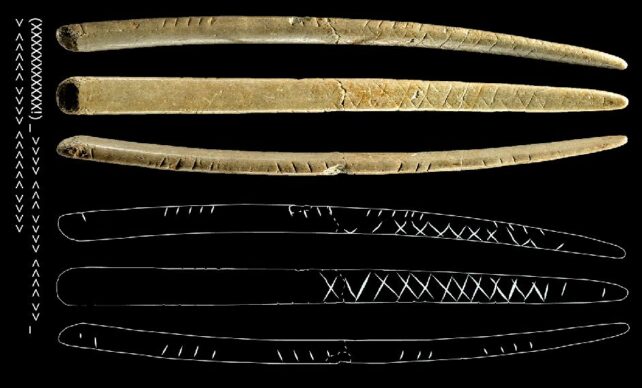
According to the researchers, the patterns observed in the signs are not random. They display features of repetition and organization that resemble, in terms of information density, the earliest known forms of proto-writing — such as Proto-Cuneiform from ancient Mesopotamia, dated to around 5,300 to 5,000 years ago.
The decorated objects showed consistent variations: for example, sequences engraved on figurines carried an information density about 15% higher than those found on utilitarian tools. This type of distribution suggests that the signs may have served specific functions and were possibly socially shared, rather than being merely simple decorations.
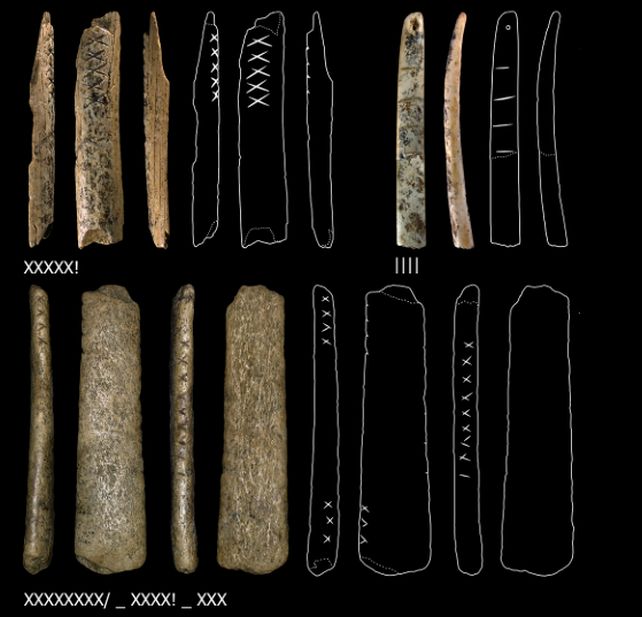
Despite the complexity of the patterns, the researchers emphasize that these symbols do not represent writing in the traditional sense — that is, a system that directly encodes spoken language. So far, there is no evidence that these signs referred to specific words or phrases.
“What we see are sequences of marks with statistical properties that resemble the earliest forms of writing, but without evidence that they represent human speech,” Bentz explained, underscoring the significance of these signs as a possible “precursor” to writing systems.
This distinction is crucial: while writing formally emerged in complex civilizations of Mesopotamia and Egypt about 5,000 years ago, the Paleolithic markings appear to have served to structure and store information in a shared way, without necessarily representing a codified language.
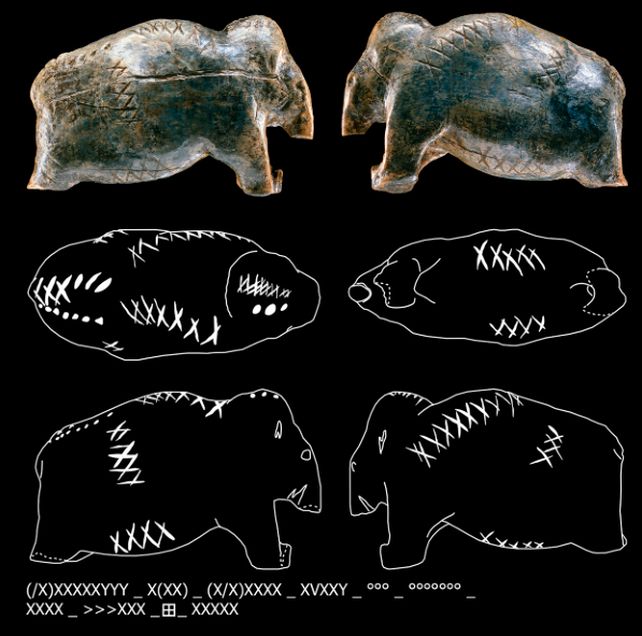
The discovery opens new perspectives on the evolution of human cognition and communication. The presence of systematic symbols among Paleolithic hunter-gatherer groups suggests that the ability to create complex graphic representation systems — and to share them socially — may be far older than previously believed.
Independent experts, such as paleoanthropologist Genevieve von Petzinger, point out that although it is difficult to decipher the exact meaning of the signs, the statistical methods used provide a robust way to infer that these markings were intentional rather than merely decorative. This indicates that prehistoric humans had already mastered a sophisticated form of visual communication long before historical civilizations developed fully fledged writing systems.
The researchers emphasize that interpreting these markings remains a challenge — many similar artifacts may have been lost over the millennia. Nevertheless, the current analysis sheds light on a poorly understood stage of human history: the transition from simple ornamentation to structured systems of signs that would, much later, evolve into alphabets and scripts.
The study is published in the Proceedings of the National Academy of Sciences.