Ancient Celtic Gold Coins Found in a Swiss Marshland


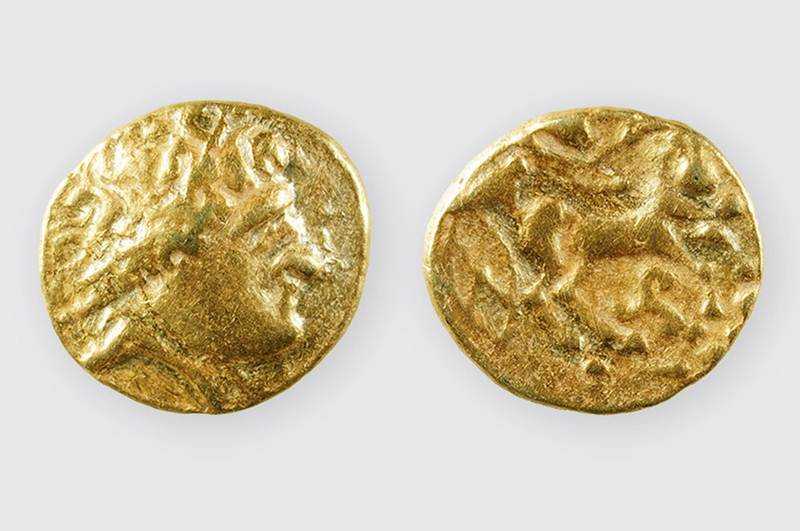
Two gold coins dated to around 2,300 years ago have been found in a marshland in northern Switzerland and may be among the oldest Celtic coins ever identified in the country. According to the Baselland Department of Archaeology, the discovery was made during a follow-up investigation at the Bärenfels marsh, near the municipality of Arisdorf, in the spring of 2025.
The coins were discovered by volunteer archaeologists Wolfgang Niederberger and Daniel Mona, who work in cooperation with the regional archaeology team. The site had previously yielded 34 silver coins between 2022 and 2023, which prompted further research in the area.
The pieces consist of a stater weighing 7.8 grams and a quarter stater weighing 1.86 grams. According to the official statement released on December 18, they belong to a very small group of roughly 20 known examples of the earliest Celtic coinage documented in Switzerland.

Continental Celtic communities began using coins after their contact with the Greek world in the late 4th century BCE, particularly through mercenary activity. Upon returning to their homelands, they started producing imitations of the coins they had received as payment. The coins found in Arisdorf follow the model of the gold staters of Philip II of Macedon, father of Alexander the Great. The obverse features the profile of the god Apollo, while the reverse shows a chariot drawn by two horses. On one of the coins, Celtic artisans added a distinctive element of their visual tradition: a triskele, a symbol composed of three spirals.
Experts indicate that coins of this type were not used in everyday transactions due to their high value. They were likely associated with contexts of prestige, such as diplomatic exchanges, marriage arrangements, or ceremonial gifts. The intentional deposition in a marshland environment suggests, according to researchers, a ritual purpose. Wetlands and bodies of water in the region were considered sacred spaces with religious significance for Celtic communities.

The archaeological report states that the most plausible hypothesis is that the coins were deposited as an offering.
The collection will be presented to the public in a special exhibition in Basel, scheduled for March 2026, bringing together the gold coins and the previously recovered silver finds from the same archaeological site.