Sound Laser Can Measure Gravity with Unprecedented Precision


Studies conducted by a team from the University of Rochester and the Rochester Institute of Technology led to the development of a new type of phonon-based laser that promises to measure gravity with unprecedented precision. This innovation could transform navigation technologies and deepen our understanding of the principles of quantum physics.
Development of the Phonon Laser
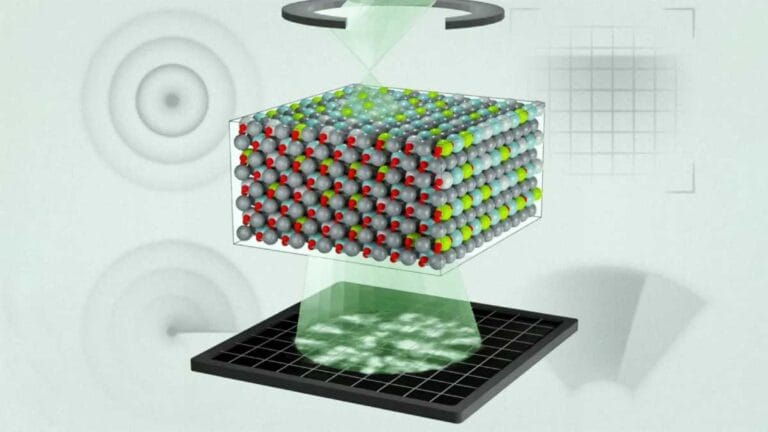
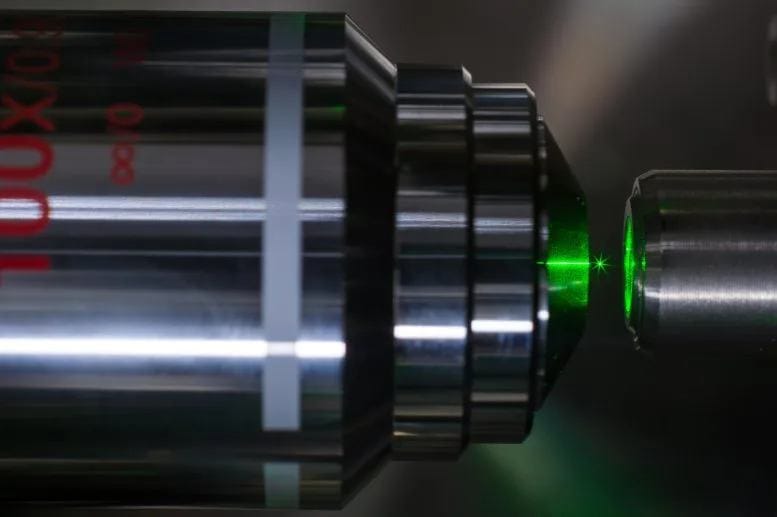
The phonon laser, which operates using vibrational units rather than photons, has been refined to control vibrations at the nanoscale. Researchers were able to guide these tiny mechanical motions to behave in a coordinated way, similar to how a traditional laser operates. The study detailing these findings was published in the journal Nature Communications.
Advances in Measurement Precision
The researchers faced the challenge of reducing noise—a common limitation in laser systems that affects measurement accuracy. Through a technique known as “squeezing,” they were able to reduce thermal noise in the phonon laser, enabling more precise measurements. This approach allows for acceleration measurements with greater precision compared to methods that use photon-based lasers or radio waves.
Noise Reduction in Laser Systems
Nick Vamivakas, a professor of Optical Physics, noted that although a laser beam may appear stable, there are fluctuations that generate noise. By appropriately manipulating the phonon laser with light, the team was able to significantly reduce these fluctuations. This improvement is crucial for applying the laser to high-precision measurements.
Potential Applications in Navigation and Fundamental Physics
With its enhanced sensitivity, the phonon laser could become a valuable tool for measuring gravity and other forces. This capability may pave the way for new navigation technologies, such as quantum compasses, which offer highly precise, interference-resistant alternatives that do not rely on satellites. Vamivakas has expressed interest in exploring how phonon lasers can contribute to the development of these innovations.
The discoveries surrounding the phonon laser represent a significant advance in applied physics and could have far-reaching implications across multiple fields, from navigation to the understanding of quantum phenomena. The future of precision measurement may be closely tied to this emerging technology.
Source: scitechdaily.com