Viking treasure with gold bracelets discovered in Denmark


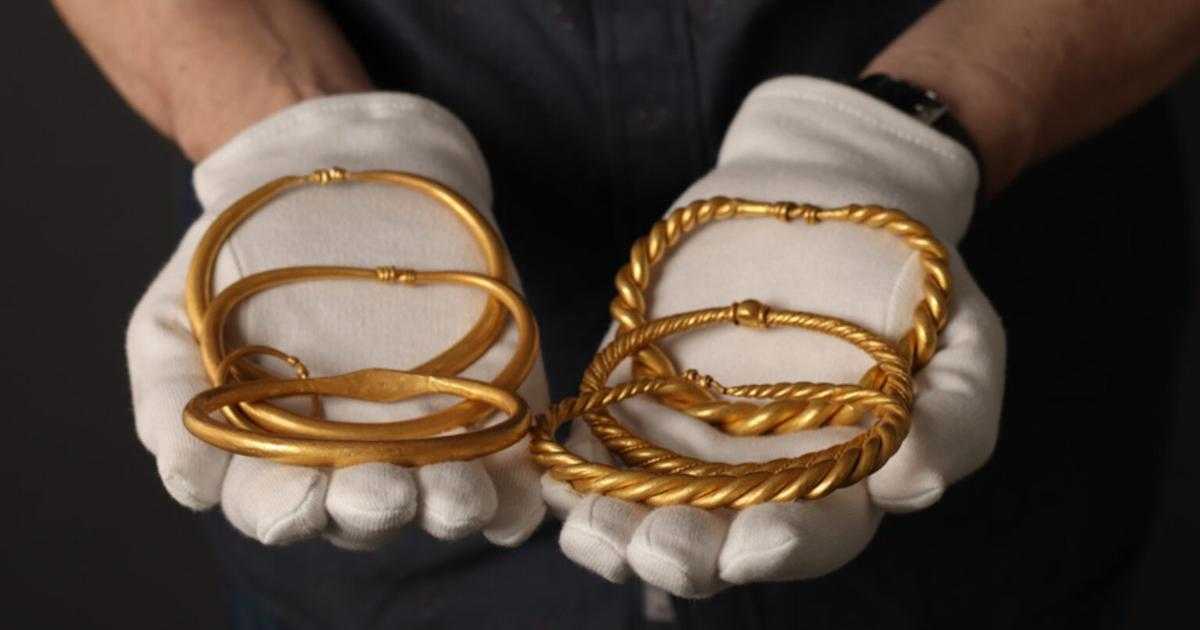
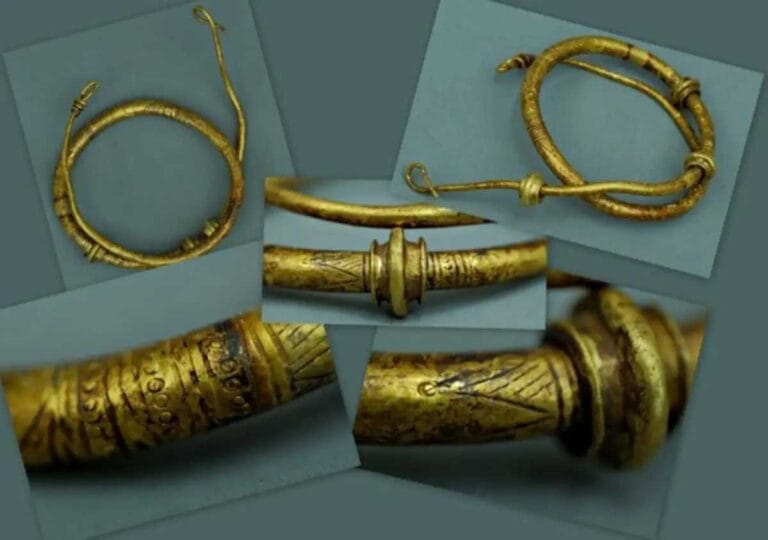
An accidental discovery in northern Denmark revealed one of the most important Viking gold treasures ever found in the country. Six solid gold bracelets, dating back more than a thousand years, were uncovered near the Rold region in Himmerland, forming what is now known as the “Rold Treasure.”
The collection weighs 762.5 grams and is already considered the third-largest Viking Age gold discovery ever recorded in Denmark. According to archaeologists, the objects help shed light on the political power and wealth of Scandinavian elites between the 10th and 11th centuries.
The first items came to the attention of researchers on April 22, 2026, when a local resident delivered two gold rings to the archaeological department of the North Jutland Museum. The pieces had been partially exposed in the soil beside a rural road in a forested area near Rold.
The museum team immediately launched an investigation at the site. During searches using metal detectors, archaeologists found another bracelet near the original discovery point. Shortly afterward, four more pieces were uncovered about 15 meters away, all intact and made of solid gold.
“It is a completely unique discovery. We have never seen anything like it here at the museum,” said Torben Sarauw, archaeologist and cultural heritage manager at the North Jutland Museum.
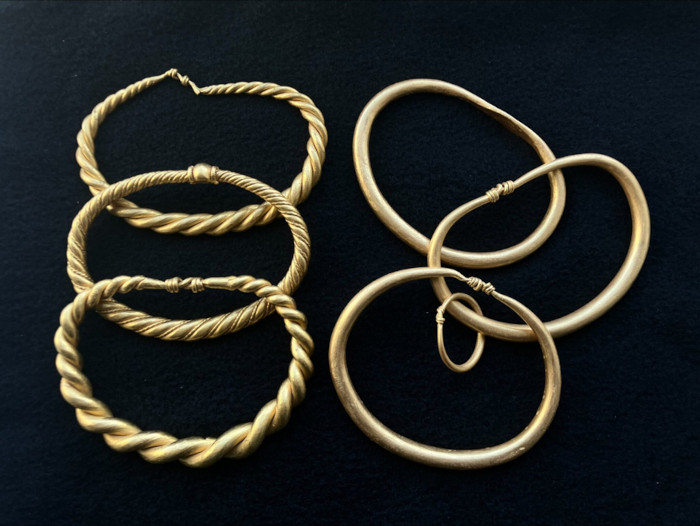
According to researchers, jewelry of this type was relatively common in Viking Scandinavia, but it was usually made of silver. Gold examples were reserved for the most powerful layers of society.
“Gold reserves during the Viking Age were concentrated among the absolute elite of society, which is precisely why discoveries like this are extremely rare,” said Torben Sarauw.
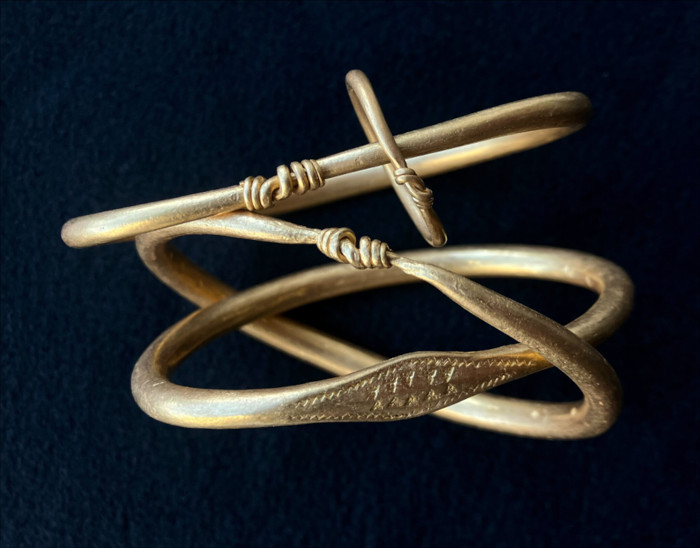
The bracelets display different manufacturing techniques. Some were crafted from twisted gold bars decorated with fine metal wires and rounded clasps. Others feature ends sealed with tightly wound metal knots. One of the pieces stands out for its geometric zigzag and triangle patterns engraved on the flattened ends.
Archaeologists dated the treasure to between 900 and 1000 AD, a period marked by the political consolidation of Danish territory under a unified monarchy. It was during this era that Harald Bluetooth expanded his rule and commissioned the famous Jelling Stones, a monument associated with the formation of the Kingdom of Denmark.
According to researchers, the jewelry held political and symbolic importance beyond its material value. Gold bracelets served as public displays of wealth, alliances, and loyalty among members of the Viking elite.
The fact that all the pieces were found intact also drew the attention of archaeologists. Viking silver objects are often discovered fragmented for use in trade transactions, a practice known as “hack silver.” In the case of the Rold Treasure, the bracelets had not been cut, suggesting either a ceremonial function or a deliberate deposit intended to safeguard valuables.
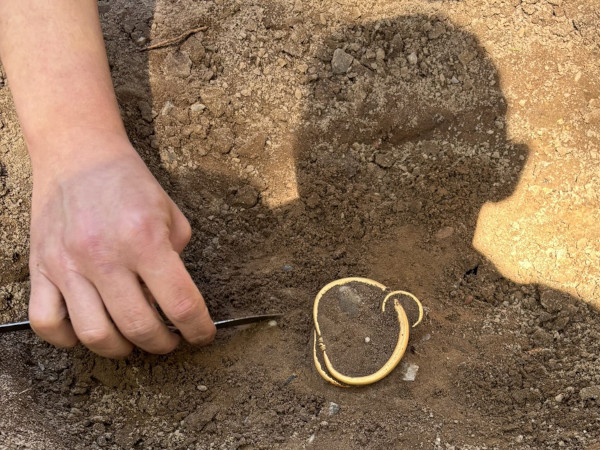
“When rings of this type were buried together, it is generally interpreted as an intentional deposit, either to protect valuable objects during times of instability or as part of ritual practices,” explained Torben Sarauw.
The exact location of the discovery has not been disclosed. The area is on private property, and those responsible for the find requested anonymity.
The bracelets were officially classified as “Danefæ,” a legal category applied to historical treasures that become property of the Danish state. The objects will undergo further analysis before being transferred to the National Museum of Denmark.
Source: ancient-origins.net