Elon Musk presents a new vision for AI satellites


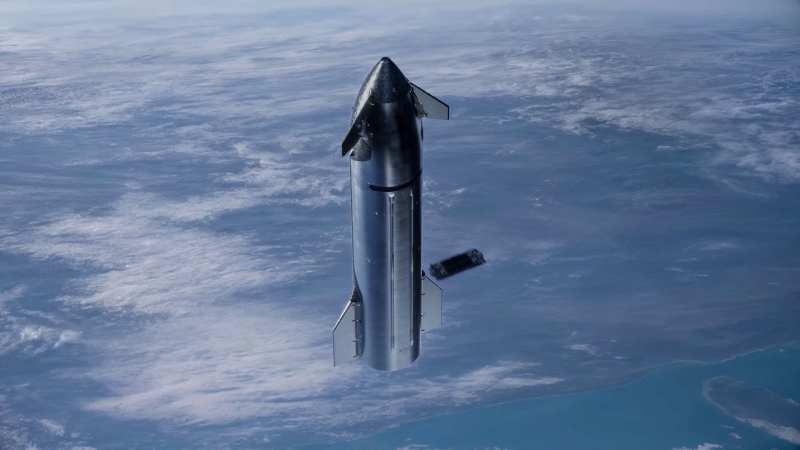
Elon Musk, CEO of SpaceX, has unveiled an ambitious new direction for space-based artificial intelligence, with SpaceX acquiring xAI. This strategic merger aims to transform AI processing capacity by moving it to a constellation of satellites in low Earth orbit.
SpaceX’s acquisition of xAI—although the exact figures are subjective due to Musk’s control over both companies—positions SpaceX as the most valuable private company in the world, with xAI valued at US$250 billion and SpaceX at US$1 trillion. Bringing these entities together will enable the creation of orbital data centers, a concept Musk describes as crucial to overcoming the challenges faced by terrestrial data centers.
Musk emphasizes that shifting AI computing power to space will address two major concerns: the growing demand for electricity to power computers and the need for water to cool the equipment. In space, near-constant solar energy and low operating and maintenance costs promise unprecedented scalability for AI computing.
“By directly harnessing near-constant solar energy with minimal operating or maintenance costs, these satellites will transform our ability to scale computing. It’s always sunny in space!” — Elon Musk
Advertisement - Continue Reading Below
The plan includes launching up to one million satellites into low Earth orbit, operating as data centers. Musk sees this as an initial step toward achieving a Kardashev Type II civilization, capable of harnessing the full power of the sun and supporting AI applications for billions of people, ensuring a multiplanetary future for humanity.
SpaceX’s satellite production facility in Redmond, Washington, already produces about 70 satellites per week for the Starlink broadband internet constellation. Musk expects this pace to accelerate significantly once the Starship rocket enters service.
“The sheer number of satellites required for space-based data centers will push Starship to even greater heights. With launches every hour, carrying 200 tons per flight, Starship will deliver millions of tons to orbit and beyond each year, enabling an exciting future where humanity will be exploring among the stars.” — Elon Musk
Advertisement - Continue Reading Below
Musk suggests that orbital data centers will offer the most cost-effective way to generate AI computing within two to three years. He even proposes that future AI satellites could be built and launched from the Moon, using an electromagnetic launcher and lunar manufacturing to place “500 to 1,000 TW per year of AI satellites into deep space.”
Despite the grandeur of Musk’s vision, industry observers express skepticism. Jim Cashel, author of The Great Connecting: The Emergence of Global Broadband and How That Changes Everything, considers the figure of one million satellites to be “fantasy at this point” and convenient for publicity and a potential SpaceX IPO.
Martin Peers, executive co-editor of The Information, argues that the shift is “financially motivated.” He contends that Musk, despite being the world’s richest man, struggles to compete in AI development with tech giants such as Google and Meta Platforms. The acquisition and the proposal for AI satellites may be a strategy to attract investors and provide a “lifeline” for xAI, which has been facing financial difficulties.
Peers also highlights the “mind-boggling technical and financial obstacles” to making data centers work in space, including radiation protection, maintenance, and the cost of getting hardware into orbit.