Plant seeds respond to the sounds of rain, study reveals


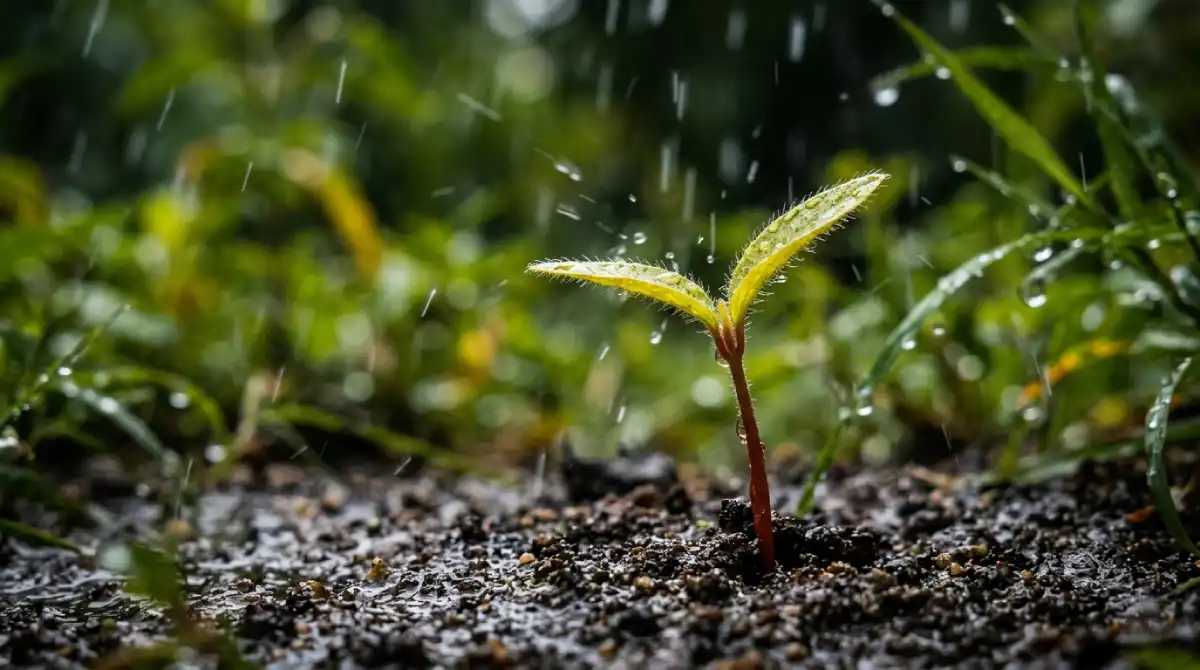
A study conducted by MIT engineers reveals that rice seeds are able to perceive vibrations generated by falling raindrops and respond to them by waking from dormancy and initiating germination. The research provides direct evidence that seeds and seedlings can sense and respond to sounds present in nature.
Discovery about the sound perception of seeds
Researchers, led by Nicholas Makris and Cadine Navarro, demonstrated that seeds do not “hear” sounds in the same way humans do, but instead respond to vibrations that create acoustic experiences. The study suggests that the energy generated by the sound of rain is enough to accelerate seed growth. “What this study shows is that seeds can sense sound in ways that help their survival,” explains Makris.
Research methodology with rice seeds
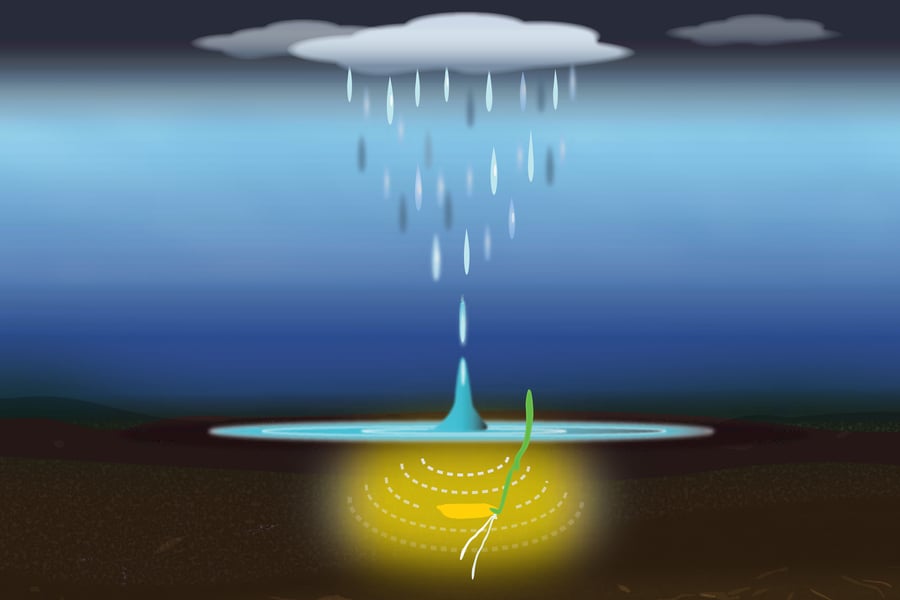
To conduct the study, scientists submerged around 8,000 rice seeds in shallow water containers at a depth of approximately 3 centimeters. Some seeds were exposed to falling water droplets for six days, with variations in drop height and size to simulate different rainfall intensities. A hydrophone recorded the acoustic vibrations produced, confirming that the experiment reproduced the vibrations of real raindrops.
Impact of sound vibrations on germination
The results showed that seeds exposed to the water droplets germinated up to 37% faster compared to those that did not receive the simulated treatment. This adaptation was facilitated by gravity-sensitive organelles known as statoliths, which help plants perceive the direction of gravity. The sound waves generated by raindrops can displace these statoliths, triggering seed growth.
Implications for agricultural cultivation
The findings suggest that other plant seeds may respond to environmental sounds in a similar way. Rice was chosen for the study due to its importance as a staple food for billions of people and because it shares gravitropic characteristics with many other plant species. The research could open new perspectives for agricultural practices, potentially allowing cultivation techniques to be optimized based on how seeds interact with their acoustic environment.
Published in the journal Scientific Reports, the study reveals a new understanding of the relationship between plants and their environment, highlighting the importance of sound vibrations in seed germination.
Source: sciencealert.com