Kimchi probiotic helps remove nanoplastics from the intestine


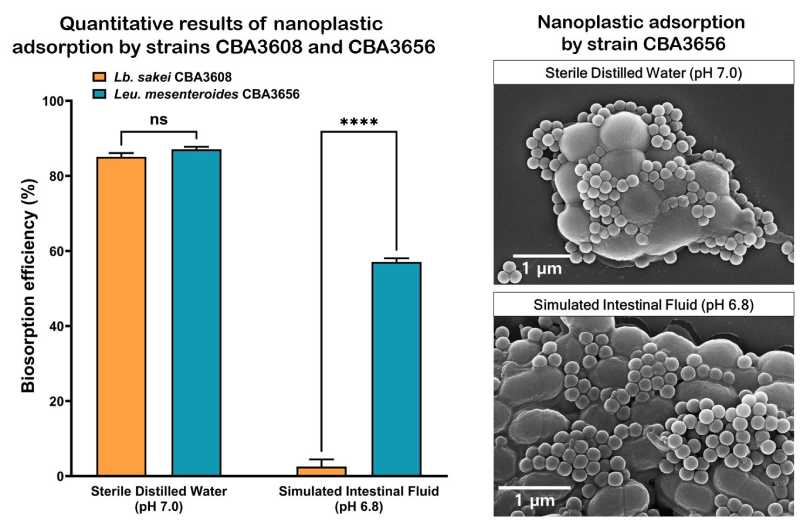
A bacterium found in kimchi — the famous Korean fermented cabbage — may be an unexpected ally in combating nanoplastic contamination in the human body. Researchers from the World Institute of Kimchi (WiKim) in South Korea identified that the microorganism Leuconostoc mesenteroides CBA3656 is capable of binding to these plastic particles in the intestine and promoting their elimination through feces. The study was published in the scientific journal Bioresource Technology.
What are nanoplastics and why are they a concern
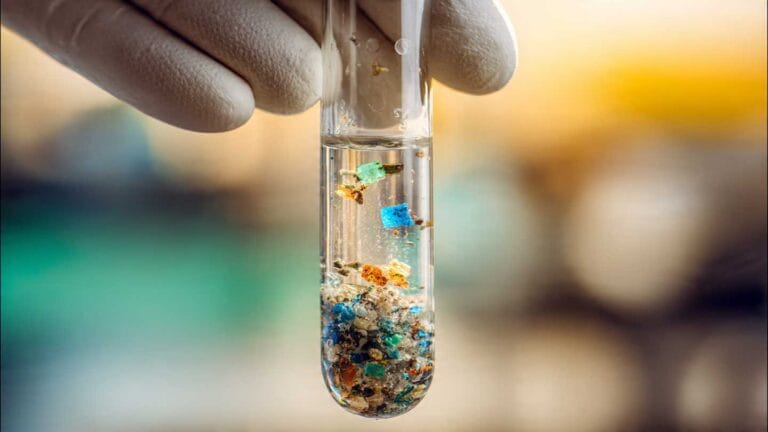
Nanoplastics are extremely small plastic particles, measuring less than 1 micrometer in diameter, originating from the breakdown of larger plastic materials. They enter the human body mainly through food and drinking water. The major concern lies in their tiny size: because they are so small, these particles can cross the intestinal barrier and accumulate in organs such as the kidneys and the brain. Until now, biological strategies to reduce this accumulation in the gastrointestinal tract have still been at a very early stage.
The kimchi bacterium that stands out
The team led by Drs. Se Hee Lee and Tae Woong Whon tested the ability of the CBA3656 strain to bind to polystyrene nanoplastics — one of the most common types of plastic. Under standard laboratory conditions, the bacterium showed an adsorption efficiency (its ability to “capture” particles) of 87%, a result comparable to that of the reference strain Latilactobacillus sakei CBA3608, which reached 85%.

The key advantage: resistance to the intestinal environment
The most significant result emerged when researchers simulated real conditions of the human intestine. In this more demanding scenario, the reference strain CBA3608 saw its adsorption capacity drop dramatically from 85% to just 3%. In contrast, the kimchi-derived strain CBA3656 maintained an adsorption level of 57% — far higher. This indicates that the bacterium can continue capturing nanoplastics even in an environment that mimics the human gut, which is essential for any practical application.
Animal tests confirm increased elimination
The experiments progressed to animal models, using mice raised in a completely microorganism-free environment — so-called germ-free mice. The results were striking: both male and female mice that received the CBA3656 strain showed more than double the amount of nanoplastics in their feces compared to the control group, which did not receive the probiotic. This suggests that by binding to particles in the intestine, the bacterium effectively helps ensure they are expelled from the body rather than absorbed.
Kimchi beyond fermentation: a new scientific role
The study represents an important expansion of what is known about kimchi bacteria. Until now, these microorganisms were primarily valued for their role in fermentation and traditional digestive benefits. The research now provides evidence that they can also interact with environmental pollutants — opening the door to a new field of study on the biotechnological potential of fermented foods in addressing public health challenges.
What the researchers say
“Plastic pollution is increasingly recognized not only as an environmental issue but also as a public health concern,” said Dr. Se Hee Lee, the study’s lead researcher. According to him, the findings suggest that microorganisms derived from traditional fermented foods may represent a new biological approach to this problem. The team announced plans to continue expanding the scientific study of kimchi’s microbial resources, focusing on contributions to health and environmental solutions.
Published on March 21, 2026, and conducted by the World Institute of Kimchi under the auspices of the National Research Council of Science and Technology of South Korea, the study does not yet represent an immediate clinical application — but it lays promising groundwork for the development of functional probiotics capable of helping the human body defend itself against one of the most silent forms of modern contamination.