Io’s Thermal Emission Estimates May Be Underestimated


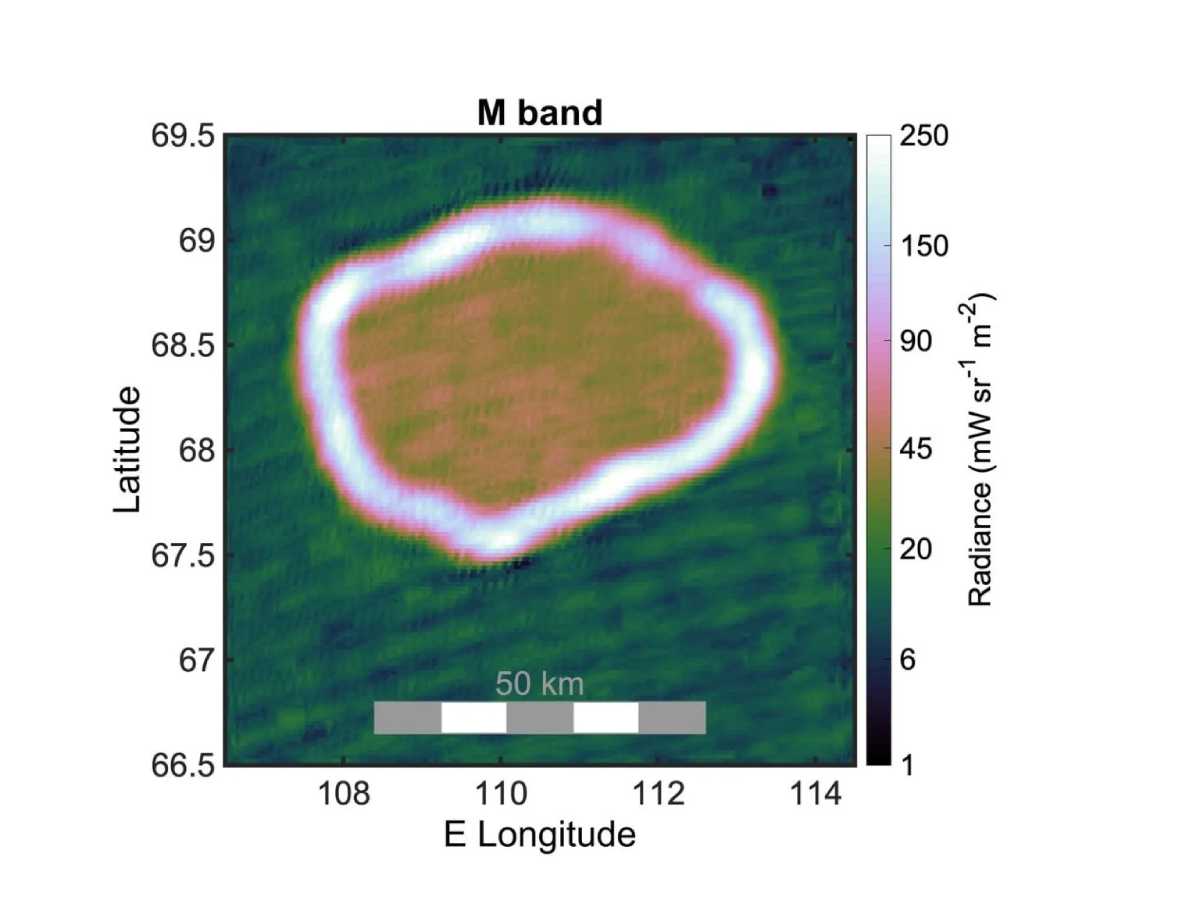
A recent study suggests that estimates of thermal emission from Io, one of Jupiter’s moons, may be drastically underestimated. The research, which uses data from NASA’s Juno spacecraft and the Jupiter InfraRed Auroral Mapper (JIRAM), reveals new insights into the moon’s volcanic activity, considered the most intense in the solar system.
Volcanic Activity on Io
Io is characterized by intense volcanic activity, with more than 400 volcanic depressions known as “paterae.” These features are responsible for the continuous emission of lava across its surface. Gravitational interactions with Jupiter and other moons create conditions that drive this activity, resulting in extreme temperatures and significant variations in thermal emission.
New Measurement Methodology
The new methodological approach used in the study involves data from JIRAM (Jupiter InfraRed Auroral Mapper), which enables the capture of thermal emission information across different wavelengths. Previously, measurements focused mainly on the M-band range, which is effective for identifying hot areas but fails to account for the thermal mass of cooler regions, which are actually more extensive.
Study Results on Thermal Emission
The results indicate that Io’s thermal emission may be up to ten times higher than previous estimates. The study analyzed 32 paterae, highlighting P63, whose emission was initially calculated at 7 gigawatts but was re-evaluated to 80 gigawatts using the new methodology. This discrepancy suggests that the current understanding of Io’s volcanic activity needs urgent revision.
Implications and Open Questions
The implications of the new data are significant, as they raise questions about the resurfacing timescale of Io’s volcanic crusts, estimated at around 13 years. However, images from earlier missions such as Voyager and Galileo do not show visible changes in the morphology of lava lakes, which creates uncertainty about the frequency and nature of volcanic activity on Io. In addition, the reliance on older datasets in current analyses limits the precision of the conclusions.
These new findings on Io’s volcanic activity and thermal emission, published in the article “Lava Lakes on Io: crust age and implications for thermal output”, highlight the need to revise existing models and open the door to further investigations into the internal dynamics of this fascinating moon.
Source: universetoday.com